



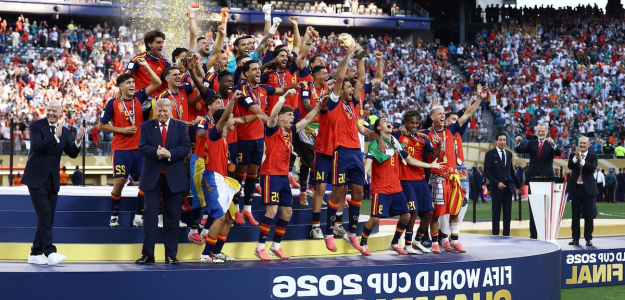
Following Spain's victory in the 2026 World Cup and the FIFA prize of USD 50 million, there are tax implications in the United States and in Spain. Discover how taxation affects the players and coaching staff.
The FIFA prize and tax implications
After Spain's historic triumph over Argentina in the final of the 2026 FIFA World Cup, the team faces a new challenge: tax obligations related to the USD 50 million prize awarded by FIFA. Although the trophy is already in Madrid, a portion of this money could end up in Washington due to the tax implications in the United States for players, coaching staff, and referees who participated in the tournament.
Tax implications for Spanish players
According to RCM Legal, 17 out of the 26 Spanish players will be required to pay taxes in Spain. Those considered tax residents in the country will have to pay taxes on their worldwide income. This is the case for players like Lamine Yamal from FC Barcelona. Additionally, the IRS considers that international athletes must pay taxes on income linked to services provided in the United States during the 2026 World Cup, commonly known as 'jock tax.'
Tax treaties and relief
FIFA has ensured tax exemptions for its host countries since 2010, but the United States does not follow the same approach. Tax treaties between countries relieve athletes from tax burdens, avoiding double taxation. For instance, Spain has a bilateral tax treaty with the United States to prevent this situation. However, local state taxes can also impact players, especially after playing matches in Georgia, California, Texas, and New Jersey during the tournament, increasing the total tax liability.
Compensation and bonuses
The prize money is distributed to the Royal Spanish Football Federation (RFEF), which then distributes it among the players. As per the agreement, 45% of the earnings will be distributed as bonuses among the athletes. These bonuses are considered ordinary compensation, allocated based on where the services were provided, meaning the matches played. However, the exact way in which FIFA distributes the prize money remains somewhat unclear.
(c) 2026, Fortune
This news is an automatic translation. You can read the original news, Implicaciones fiscales para España tras ganar la Copa del Mundo 2026


-
 26 Aug 2026 | 15:00Grandma ready to shine in her debut with Colo Colo
 -
 25 Aug 2026 | 09:00Argentina advances to semifinals in 2026 Hockey World Cup after defeating India
 -
 25 Aug 2026 | 16:00Spain: Coach speaks out about post-final incidents at 2026 World Cup
 -
 25 Aug 2026 | 19:00Young African talent joins Real Madrid in a special ceremony
 -
 25 Aug 2026 | 18:00The ESTO marks a milestone in the coverage of the 2026 World Cup
 -
 25 Aug 2026 | 12:00The Lions advance to the semifinals of the 2026 World Cup after defeating India
 -
25 Aug 2026 | 18:00The ESTO marks a milestone in the coverage of the 2026 World Cup